The Journey
From early experiments like Synaesthesia, where music and painting were combined to deepen engagement, my work has continually explored how technology can extend the experience of art beyond the physical object.
Connecting the Journey
As my experiments evolved through AR, blockchain networks, AI and narrative world-building, the role of the audience also began to shift. Viewers became participants, collectors became collaborators, and artworks began to function as interconnected systems rather than isolated pieces.
Today this exploration continues through immersive environments such as EXPOS3D, where physical and digital experiences merge, and through Book of Logos, an evolving visual language in which audiences play an active role in shaping meaning through interpretation and participation. These systems are still evolving, pointing toward new ways that art, technology and collective participation may shape the cultural narratives of the future.
The evolution of my work can be traced across five distinct phases.
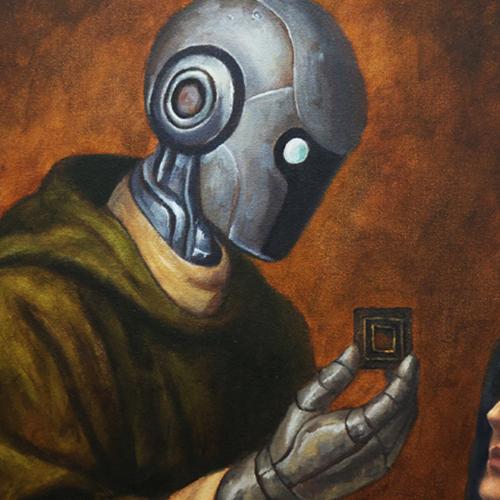
Building on the idea of interconnected narrative worlds, my work has increasingly shifted toward immersive environments where audiences are not just viewers but active participants in the experience of the artwork.
This approach culminated in EXPOS3D, an immersive exhibition combining painting, animation, augmented reality and real-time AI-generated video influenced by visitor movement. Visitors move through a layered environment where physical artworks, screens and interactive technologies react to their presence and engagement.
Many of these ideas also continued the spiritual and symbolic themes that first emerged in earlier works such as Bitcoin Angel and CryptoAngels, exploring how belief systems, mythology and technology intersect in contemporary culture.
Alongside these immersive environments, I began developing Book of Logos, an evolving symbolic language exploring how meaning can be constructed, interpreted and shared within digital networks. The project combines symbols, game mechanics and participatory interpretation, inviting collectors and audiences to actively engage with the artwork’s unfolding narrative.
These projects reflect a growing interest in creating artistic systems rather than standalone works, where technology, symbolism and collective participation combine to shape how meaning emerges within evolving artistic systems.
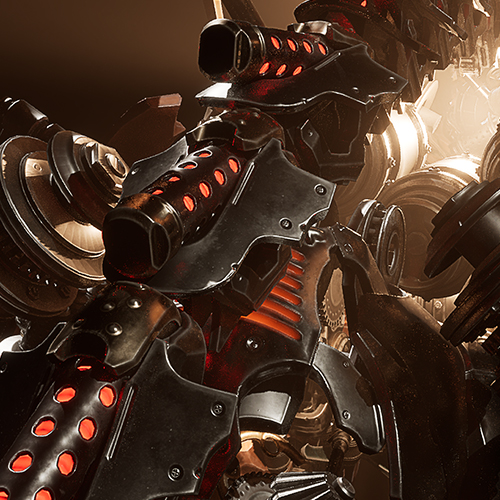
As the crypto art movement continued to grow, my work began evolving from individual artworks and smaller series into larger interconnected projects. Rather than creating single pieces for the fast-moving Web3 art market, I began developing narrative worlds that could unfold across multiple media and platforms.
Projects such as CryptoAngels combined painting, animation, NFTs, Bitcoin Ordinals, a series of 21 bronze cast sculptures and even a video game to explore themes of mythology, technology, faith and belief in the digital age.
During this period I also experimented with new tools and collaborations, including MAN vs MACHINE (2021), my first use of AI within the work, and projects such as The Oath and The Crown, a large-scale collaborative release created with the London Evening Standard to mark the coronation of King Charles III.
This period also gave rise to The Engine, a project combining a large series of paintings, animations and essays to construct a vast allegorical world exploring the balance between creation and destruction, enlightenment and entropy.
These works began to move beyond standalone artworks toward interconnected systems where stories, symbols, technologies and collectors could interact across multiple formats.
The exploration of these networked worlds laid the foundation for the next stage of my practice: immersive environments and participatory systems where audiences become active participants in the experience of the artwork.
In June 2017 I purchased Bitcoin for the first time and quickly fell down the cryptocurrency rabbit hole. The ideas, technology and culture of this emerging space inspired a new body of work exploring the intersection of art, finance and decentralised systems.
Work began in January 2018 on a series of paintings that would become Crypto Disruption, an exhibition exploring the people and ideas shaping the crypto movement. During this time the crypto market experienced a huge crash and I lost almost everything...
...but I held strong, kept painting and persevered through the long bear market.
Before the exhibition even opened in October, collectors who had followed the works in progress online began contacting me to purchase the paintings using Bitcoin and Ethereum. It was the first time I experienced a global community of collectors who deeply resonated with my work and embraced the combination of art, technology and crypto culture. It was a pivotal moment in my career.
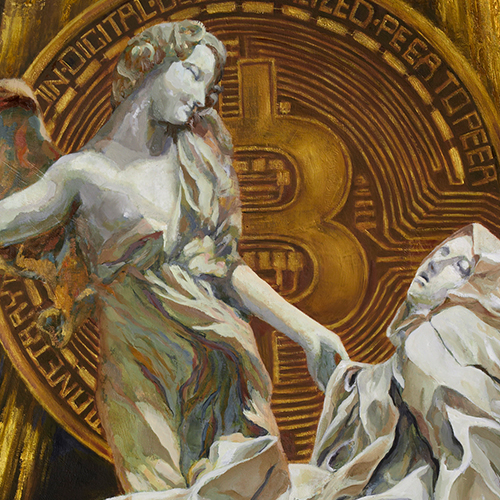
This exploration continued through projects such as CryptoCubism (2019–2020), a series that reinterpreted some of Picasso’s iconic cubist compositions through contemporary crypto culture, linking the disruptive spirit of modernist art with the innovation of the blockchain movement. In February 2021, the NFT release of Bitcoin Angel — an open edition of 4,158 artworks — became a major breakthrough moment, introducing my work to a much wider global audience.
The original Bitcoin Angel painting had first appeared in the 2018 Crypto Disruption exhibition, and the imagery quickly became a recurring symbol within my work. Themes of angels, faith and belief systems began to emerge, later developing through projects such as CryptoAngels, Fallen Angel and eventually the spiritual and philosophical framework explored in EXPOS3D and Book of Logos.
The experience revealed to me how blockchain technology could transform the way art is collected, allowing artists and collectors to connect directly beyond traditional gatekeepers.
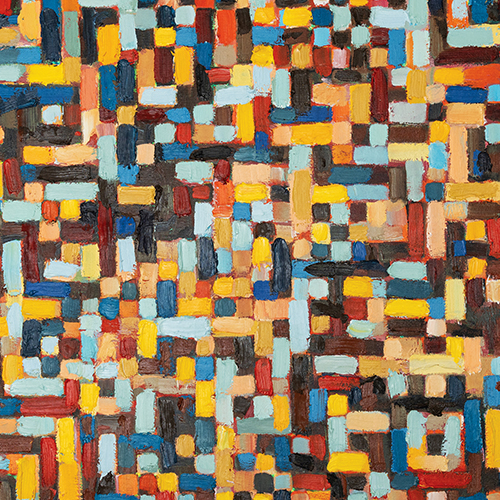
In 2011 I began experimenting with QR codes, initially while promoting an upcoming exhibition.
The idea quickly evolved into large-scale QR code paintings made with thick impasto oil paint that looked like abstract artworks but could still be scanned, directing viewers to a bespoke website where artists worldwide could upload their work to connect with new audiences. A social media plugin also allowed visitors to comment on and share the artworks online.
These projects explored how physical artworks could function as gateways to digital spaces, turning paintings into portals that connected viewers to online communities and digital experiences. At the time smartphones were becoming increasingly common, and I became fascinated by the idea that a traditional painting could open access to entirely new layers of information and digital environments.
From 2013 onwards my exploration expanded into augmented reality and NFC tag experiments. At a time when very few artists were exploring AR as a creative medium, I began incorporating mobile-triggered animation and video into paintings, becoming an early pioneer of augmented reality art.
Although these ideas were difficult for traditional art institutions to categorise, I became consumed by the new possibilities for combining painting with interactive technology.
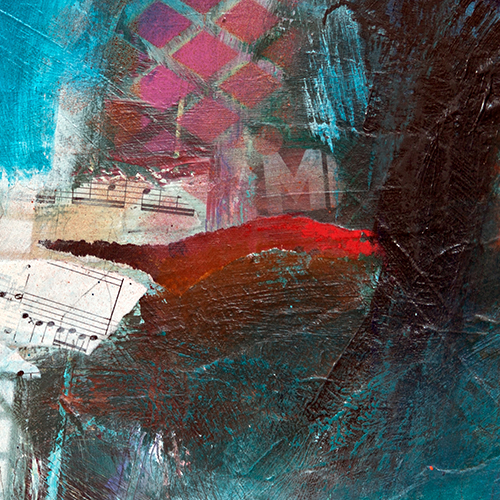
Education at Leith School of Art and Edinburgh College of Art formed the foundation of my early practice in drawing and painting.
During this period I explored both figurative work and abstraction, investigating how colour, movement and composition influence emotional response. My degree show (2008) focused on the psychological impact of colour, presenting two separate spaces filled entirely with red or blue abstract paintings designed to evoke contrasting emotional states.
This exploration evolved into my first solo gallery exhibition, Synaesthesia (2010), a series of paintings inspired by contemporary Scottish music. MP3 players provided in the exhibition allowed visitors to listen to the song that inspired each painting while viewing the work.
I had previously read a study suggesting that visitors spend on average around 17 seconds looking at each artwork in a gallery. That statistic encouraged me to think about how viewing time might be extended. With the addition of music, visitors spent on average over 90 seconds engaging with each painting. The MP3 experiment revealed how technology could deepen engagement and encourage viewers to spend longer with the artwork, prompting me to explore ways that physical artworks might connect with digital systems.